When Does a Child Need a Crown?
A dentist may recommend a dental crown when too little strong tooth remains for a filling. The decision also depends on your child’s age and how long the tooth must stay in place.
Large Cavities Weaken the Tooth
A small cavity may be repaired with a dental filling. When damage spreads across several sides, a large filling may crack or come out. A crown wraps around the tooth for broader support.
Broken Teeth Need Full Protection
A fall, sports injury, or hard food can break a baby tooth. If enough teeth remain, a crown may prevent further damage. Care for tooth fractures helps determine whether the tooth can be saved.
Deep Tooth Damage Needs More Support
After damage inside a tooth is cleaned and protected, the outside may be too weak for normal chewing. A crown holds the tooth together and reduces the chance of another break.
Failed Fillings May Need a Crown
If a filling repeatedly chips or falls out, another filling may not solve the problem. A crown may provide more dependable coverage, especially on a back baby tooth.
The American Academy of Pediatric Dentistry guidance supports full-tooth crowns for badly damaged, fractured, or weak teeth and when smaller repairs are likely to fail.
Why Save a Baby Tooth?
Parents often wonder why baby tooth crowns are needed when those teeth eventually fall out. A back baby tooth damaged at age five may still be needed for several years.
Baby teeth support chewing, speech, and room for incoming adult teeth. Losing one too early may let nearby teeth shift, sometimes creating a need for a space maintainer. Saving the tooth can also prevent ongoing pain and help a child chew on both sides.
Filling, Crown, or Tooth Removal?
The right choice depends on how many healthy tooth remains and whether it can stay comfortable and useful.
| Option |
Often Considered When |
Main Goal |
| Filling |
Damage is small and strong tooth remains |
Repair one area |
| Crown |
Damage is large, the tooth is weak, or a filling may fail |
Cover and strengthen |
| Tooth Removal |
The tooth cannot be repaired |
Remove the source of trouble |
A dental crown for a child’s tooth is not right for every cavity. Dr. Reesha can review the exam and digital X-rays, show parents how much strong tooth remains, and explain why a filling, crown, or removal is recommended.
Which Kids’ Crown Works Best?
The best crown depends on tooth location, chewing pressure, appearance preferences, and cost.
Stainless Steel Crowns for Kids
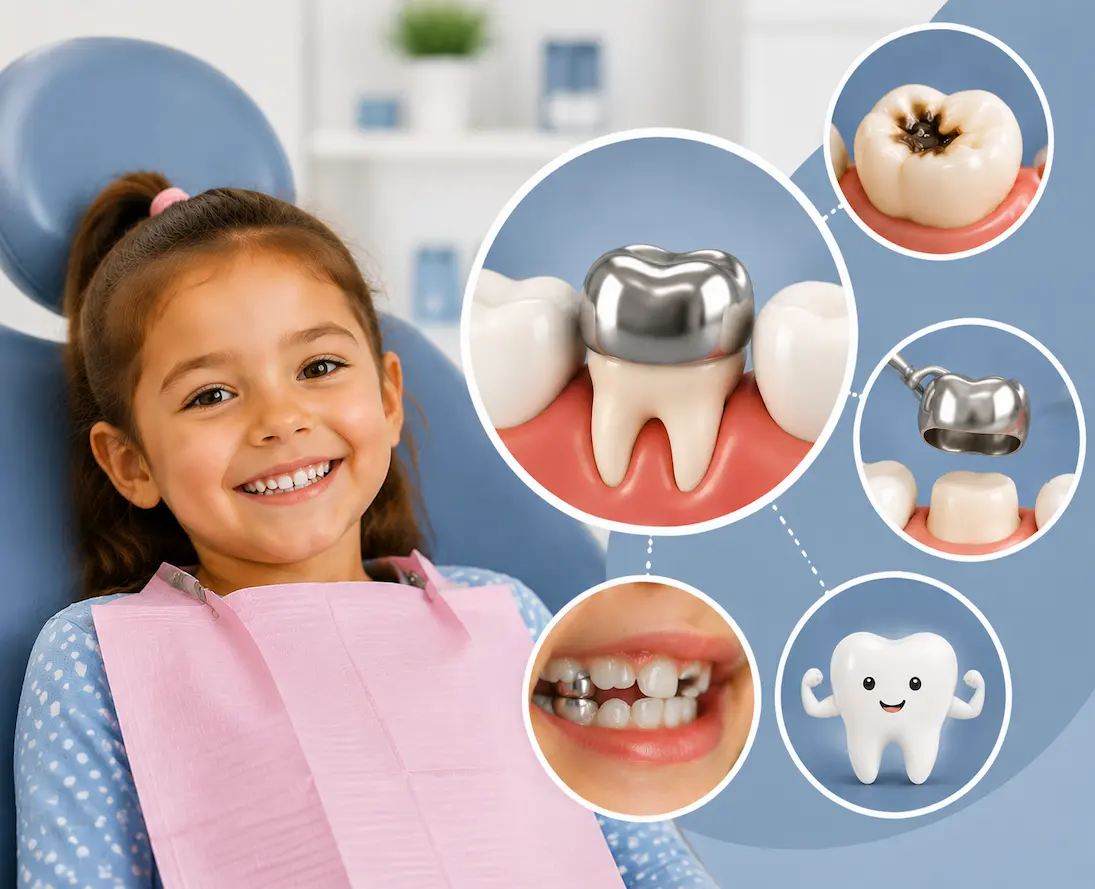
Stainless steel crowns are commonly used on back baby teeth. They are strong, reliable, and often fitted in one visit. Their main drawback is the silver color.
Tooth-Colored Crowns for Children
Zirconia white crowns look more like natural teeth and may suit visible teeth or selected back teeth. They can require more tooth shaping, and the cost may differ from a metal crown.
No material is best for every child. Tooth position, remaining strength, bite, and comfort during the visit all matter.
What Happens During Crown Placement?
The visit usually follows four steps:
- The dentist examines the tooth and may take an X-ray.
- Numbing medicine keeps the area comfortable.
- The damaged part is cleaned, and the tooth is shaped.
- The crown is fitted, checked, and secured.
Many ready-made crowns can be placed in one visit, while some tooth-colored choices need extra steps. Dr. Reesha uses age-appropriate explanations to help children understand the visit and guides parents on what to expect afterward.
How Should Baby Tooth Crowns Be Cared For?
Wait until numbness is gone before your child chews to prevent cheek or lip biting. Begin with soft foods and avoid gum, sticky candy, ice, and hard snacks.
Brush twice daily and floss gently around the crown. Regular cleanings and exams help check its fit and the nearby tooth surface.
Call the dentist if the crown becomes loose, falls off, or causes increasing pain or swelling. Do not glue it back at home. Save it and bring it to the appointment.
Protect Your Child’s Tooth Early
A pediatric dental crown can preserve a tooth that is too damaged for a dependable filling. Ask how much healthy teeth remain, why a crown is recommended, and which material fits your child. Seek early care for pain, swelling, a broken tooth, or difficulty chewing.
Why Choose Fresh Pediatric Dentistry?
Fresh Pediatric Dentistry provides child-focused care in a calm setting where questions are welcomed. Dr. Reesha explains crown choices clearly, helps children understand each step, and gives parents practical home-care guidance. Families receive treatment plans based on the tooth’s condition, comfort needs, appearance goals, and long-term function for every child.


.svg)

