How Dental Sealants and Fluoride Help Prevent Cavities
Dental Sealants for Kids: How Sealants and Fluoride Help Prevent Cavities
Even when children brush every day, their back teeth can still collect food in tiny lines and dips. That is why many parents look for simple ways to stop cavities before they start. Dental sealants for kids and fluoride both help protect teeth, but they work in different ways.
Sealants cover the chewing areas of back teeth, while fluoride helps support the strength of all teeth. Together, they can make cavity prevention for kids easier, especially for children who love snacks, forget to brush well, or have teeth that are harder to clean.
Kids Cavity Risk Starts Early
Children are still learning how to brush the right way. They may rush, miss the back teeth, or brush only the front teeth because those are easier to see. Sticky snacks, juice, sports drinks, and frequent grazing can also make it easier for tooth damage to start.
Baby teeth matter, too. They help children chew, speak clearly, and hold space for adult teeth. That is why baby tooth decay prevention should begin early, not after a child already has pain or a visible cavity.
The goal is not to make parents feel guilty. The goal is to give children extra protection where brushing alone may not be enough.
Dental Sealants for Kids Protect Back Teeth
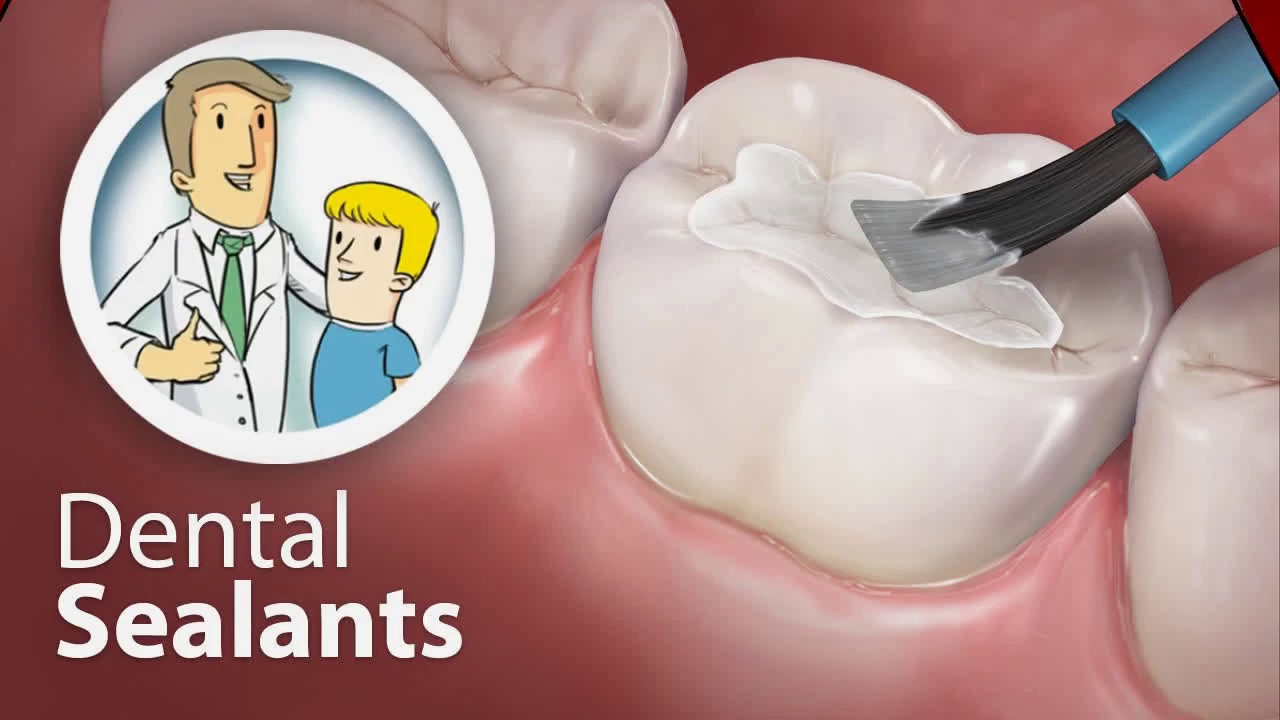
Dental sealants for kids are thin protective coatings placed on the chewing surface of the back teeth. These teeth often have small lines and dips where food can sit, even after brushing.
A sealant works like a clear raincoat for the tooth. It helps block food and germs from settling into those hard-to-clean spots. The process is quick, does not require numbing, and is usually comfortable for children.
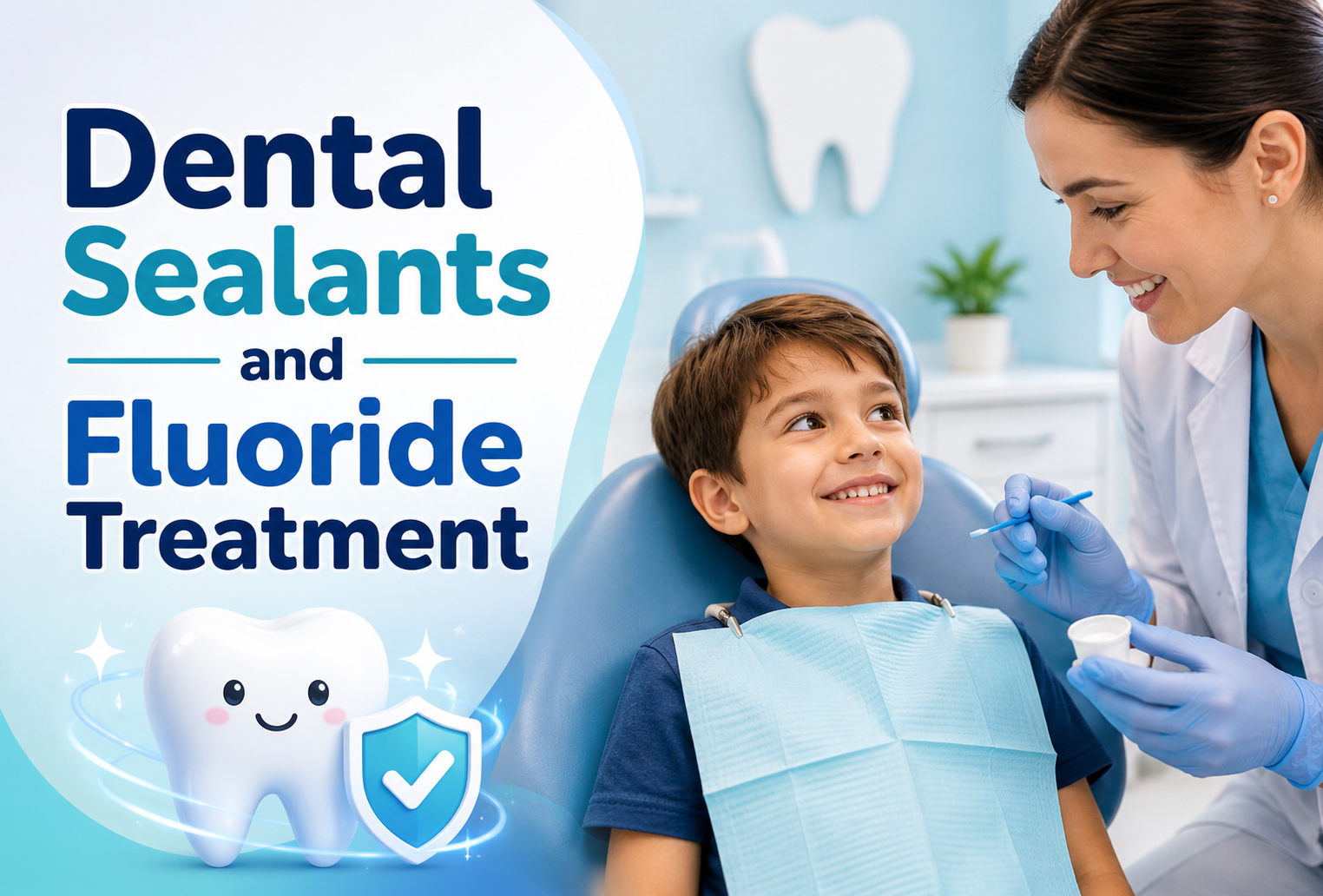
A pediatric fluoride treatment helps support the outside of the teeth so they can better handle daily eating, drinking, and brushing challenges. Unlike sealants, fluoride is not just for the back teeth. It helps protect more areas of the mouth.
Fluoride may be recommended during pediatric cleanings and exams, especially if a child has had cavities before, brushes quickly, eats frequent snacks, or has early signs of tooth weakness.
For children with early cavity concerns, your dentist may also discuss silver diamine fluoride as another option.
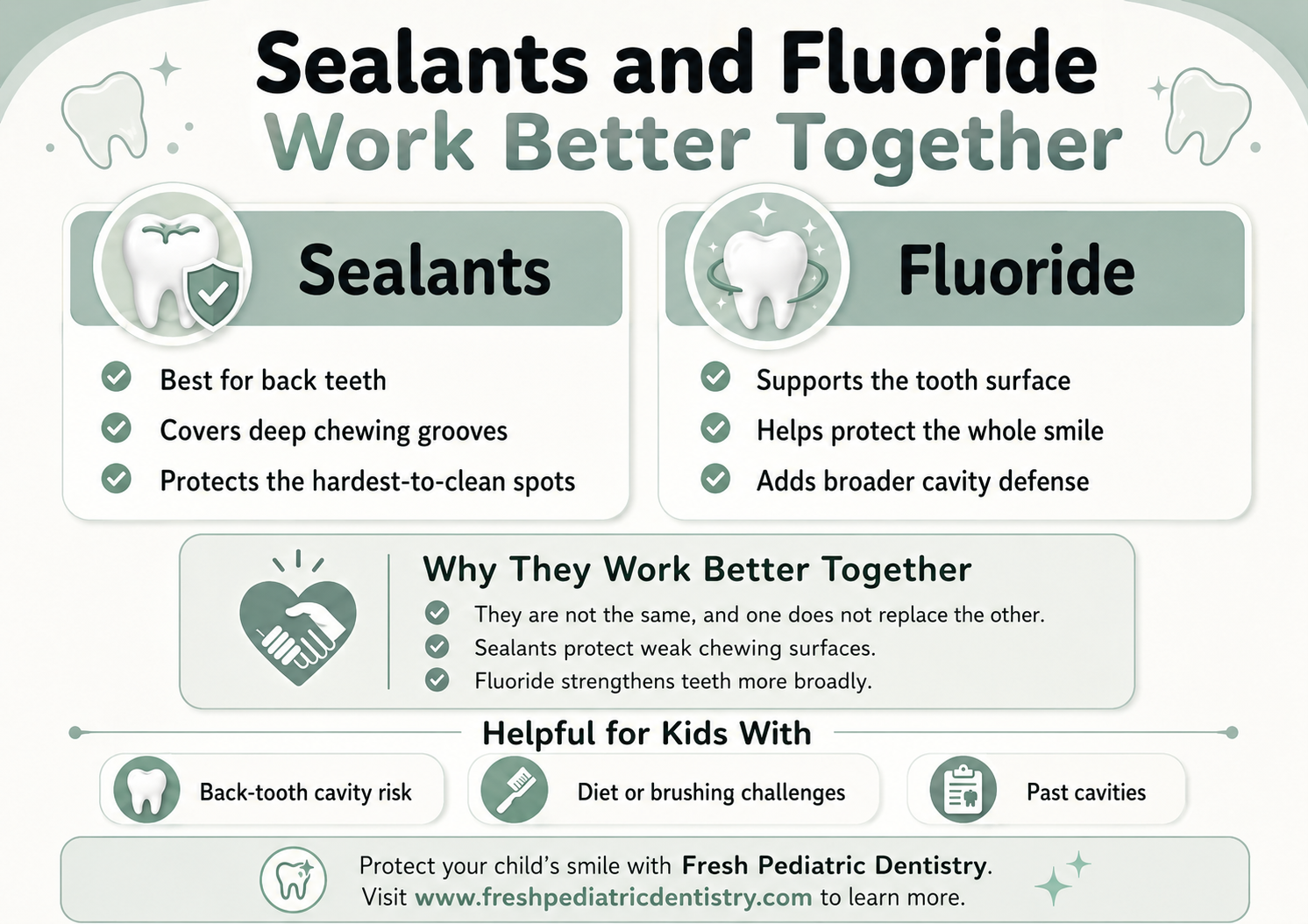
Sealants and Fluoride Work Better Together
Sealants and fluoride are not the same, and one does not fully replace the other.
Sealants are best for the back teeth because they cover deep chewing lines. Fluoride helps support the tooth surface more broadly. Think of sealants as a shield for the hardest-to-clean spots and fluoride as strength support for the whole smile.
This combination is helpful to prevent cavities in children because cavity risk does not come from one place only. Some children need extra protection on their back teeth. Others need help because of diet, brushing habits, or past cavities.
Many children get sealants when their first adult back teeth come in, often around age 6. Another set of back teeth is commonly checked around age 12. These ages can vary, so the best answer comes from a child’s dental visit.
Some baby teeth may also need extra protection if they have deep lines or if the child gets cavities easily. Fluoride can be used earlier, depending on age, home care, and cavity risk.
Parents should ask about sealants and fluoride during a regular dental checkup, not only when a problem appears.
Child Dental Visit Steps
The visit is simple and child-friendly. First, the dentist checks the teeth and looks for areas that need protection. Next, the teeth are cleaned and dried. The sealant is then painted onto the back teeth and set in place.
If fluoride is recommended, it may be brushed or placed on the teeth near the end of the visit. Most children can return to normal activities quickly. The dentist may suggest avoiding very sticky or hard foods for a short time to help the sealants stay in good shape.
At-Home Cavity Prevention Tips
Sealants and fluoride give strong protection, but daily habits still matter. Parents can help prevent cavities in children by building simple routines at home:
Brush your child’s teeth twice a day, especially before bed.
Use the right amount of fluoride toothpaste for your child’s age.
Offer water between meals instead of juice or sweet drinks.
Limit sticky snacks, candy, and frequent grazing during the day.
Help younger children brush the back teeth where food often gets stuck.
Keep regular dental visits so the dentist can check sealants and tooth health.
Ask your child’s dentist about sealants and fluoride if your child is around 6 or 12, has deep lines in the back teeth, has had cavities before, snacks often, or brushes too quickly.
Also ask if you notice white or brown spots, tooth sensitivity, or food getting stuck in the same areas. Early questions can prevent bigger treatment later. If a cavity has already started, cavity treatment may be needed, but prevention is always easier when possible.
Why Choose Fresh Pediatric Dentistry?
Fresh Pediatric Dentistry focuses on prevention first, so children can build healthy smiles with less stress. Our team explains sealants, fluoride, cleanings, and home care in simple words parents understand. We create child-friendly visits, answer questions clearly, and help families choose the right protection at the right time for them.
Frequently Asked Questions
Are Dental Sealants Worth It for Kids?
Yes, dental sealants are worth it for many children, especially if their back teeth have deep lines where food gets stuck. Sealants help protect these teeth before cavities start, making them a smart option for cavity prevention for kids.
Can My Child Eat After Dental Sealants?
Most children can eat after getting dental sealants. However, it is best to avoid very sticky candy or hard snacks the same day. This helps the sealants stay smooth and properly placed on the back teeth.
Does My Child Still Need Fluoride Toothpaste?
Yes, fluoride toothpaste is still important. Sealants protect the back teeth, while fluoride toothpaste helps protect all teeth during daily brushing. Some children may also need pediatric fluoride treatment for extra support.
Do Baby Teeth Need Cavity Protection?
Yes, baby teeth need protection because they help children chew, speak, and hold space for adult teeth. Baby tooth decay prevention is important because cavities in baby teeth can still cause pain and dental problems.
What If My Child Already Has a Small Cavity?
If your child already has a small cavity, sealants may not fix that tooth. The dentist may treat the cavity first, then recommend sealants or fluoride to help protect the other teeth from future cavities.


.svg)

